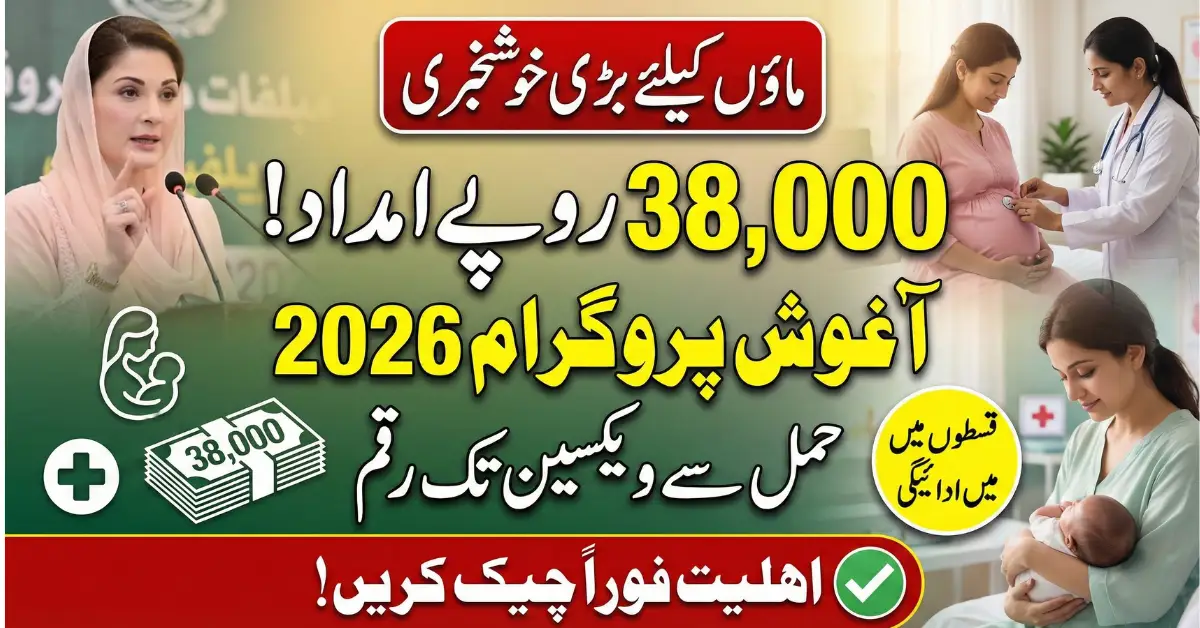
A major relief announcement has been made for expecting and new mothers in Punjab. Under the updated Agosh Program Punjab 2026 framework, eligible women can now receive up to Rs 38,000 in financial assistance.
This increase reflects the Punjab government’s continued focus on maternal health, child nutrition, and support for vulnerable households. The revised payment structure links financial aid directly to medical checkups and child immunization milestones, ensuring both health and financial stability.
Here is a complete and clear guide explaining eligibility, payment breakdown, and how to apply.
What Is Agosh Program Punjab?
The Agosh Program Punjab is a conditional cash transfer initiative operating under the Punjab Human Capital Investment Project (PHCIP).
Its core objective is simple. Improve maternal health. Protect newborn children. Support low-income families.
The program provides staged financial assistance to pregnant and lactating mothers. However, payments are linked with health visits and vaccinations to promote safe pregnancy and healthy child development.
Why the Payment Was Increased in 2026
Earlier, beneficiaries received smaller installment amounts. In 2026, the total support has been enhanced to Rs 38,000 per eligible mother.
This increase comes at a time when healthcare and household costs are rising. The updated structure ensures that mothers are encouraged to:
- Attend antenatal checkups
- Choose institutional delivery
- Complete postnatal care visits
- Ensure full child immunization
The financial support acts as both an incentive and relief.
Payment Breakdown of Rs 38,000
The total Rs 38,000 under Agosh Program Punjab is released in stages.
During Pregnancy
Rs 2,000 at first antenatal checkup
Rs 2,000 at second antenatal visit
At Delivery
Rs 4,000 for delivery at a registered health facility
Postnatal Care
Rs 2,000 after post-delivery checkup
Child Immunization Stages
- Rs 6,000 for initial vaccines
- Rs 8,000 for additional vaccination milestones
- Rs 14,000 after completion of full immunization schedule
Payments are made gradually to ensure mothers follow the health timeline.
Who Is Eligible for Agosh Program Punjab 2026?
The scheme specifically targets low-income and vulnerable households.
General eligibility includes:
- Resident of Punjab
- Pregnant or lactating woman
- Household registered in the National Socio-Economic Registry (NSER)
- Valid CNIC registered with NADRA
- Priority for rural and flood-affected communities
Verification is conducted through official databases before approval.
Documents Required for Registration
To apply successfully, keep the following documents ready:
- Original CNIC
- Copy of husband’s CNIC
- NSER registration details
- Medical record card from registered health center
- Child’s birth certificate (for lactating mothers)
Accurate documentation helps avoid delays in payment.
How to Apply for Agosh Program Punjab 2026
The process is simple and handled through registered health facilities.
Step 1: Visit a Registered Health Center
Go to a Punjab Health Department-approved facility.
Step 2: Provide CNIC and Family Details
Share required documents and confirm household information.
Step 3: Complete First Antenatal Checkup
Registration usually begins during the first pregnancy visit.
Step 4: Health Worker Registration
Your information is entered into the official system.
Step 5: Receive Payments
Funds are transferred directly to your bank account or mobile wallet.

Mothers are advised to ensure their CNIC and NSER data are updated before applying.
How Agosh Program Punjab Supports Maternal Health
This program is not just financial support. It is a health-focused welfare strategy.
By linking payments to medical visits, it ensures:
- Timely antenatal monitoring
- Safe institutional deliveries
- Postnatal care awareness
- Complete child vaccination
This approach reduces maternal mortality and strengthens child immunity.

Agosh Program Punjab vs BISP Kafalat
Many families confuse Agosh with other welfare schemes.
The Agosh Program Punjab focuses specifically on maternal and child health.
In contrast, BISP Kafalat provides general income support to vulnerable families nationwide.

Agosh payments are conditional and linked to healthcare milestones. BISP payments are not health-linked.
Both programs aim to reduce poverty, but Agosh has a direct healthcare focus.
Latest 2026 Update
The Rs 38,000 total assistance reflects the government’s strengthened commitment to maternal welfare.
Officials have emphasized digital monitoring of beneficiaries to ensure transparency. Payments are directly transferred, reducing the risk of middlemen interference.
Beneficiaries can track payments through bank SMS alerts or by consulting their registered health center.
Safety Tips for Applicants
To avoid fraud:
- Register only through official health facilities
- Do not pay any agent
- Verify all information from trusted government sources
- Keep your CNIC details secure
The Agosh Program Punjab registration process is free and transparent.
Conclusion
The Agosh Program Punjab 2026 is a major step toward protecting mothers and newborns across the province. With total support increased to Rs 38,000, the scheme offers both financial relief and structured healthcare support.

By linking payments with antenatal visits and immunization milestones, the program ensures healthier families and stronger communities.
Eligible mothers should visit their nearest registered health center and complete the required steps to benefit from this important initiative.
FAQs
1. How much total support is provided under Agosh Program Punjab 2026?
Eligible mothers can receive up to Rs 38,000 in stages.
2. Is registration free?
Yes, registration at registered health centers is free.
3. Are payments given at once?
No, payments are released in stages linked to health checkups and vaccinations.
4. Can urban residents apply?
Yes, but priority is given to rural and vulnerable areas.
5. How can I check payment status?
Through bank SMS alerts, mobile wallet notifications, or the registered health center.